Last December, I wrote about having the opportunity to meet with filmmaker Laurie Kahn and film editor Bill Anderson and view a rough cut of their documentary-in-progress about romance writers,
Love Between the Covers. Earlier this month, I had the pleasure of watching the final version, when it was screened via a special
Tugg screening at the Kendall Square Cinema here in Massachusetts. Back in December, Laurie asked me not to report on any of the film's details, but now, with the film "in the can," as it were, I'd like to share some thoughts about the film.
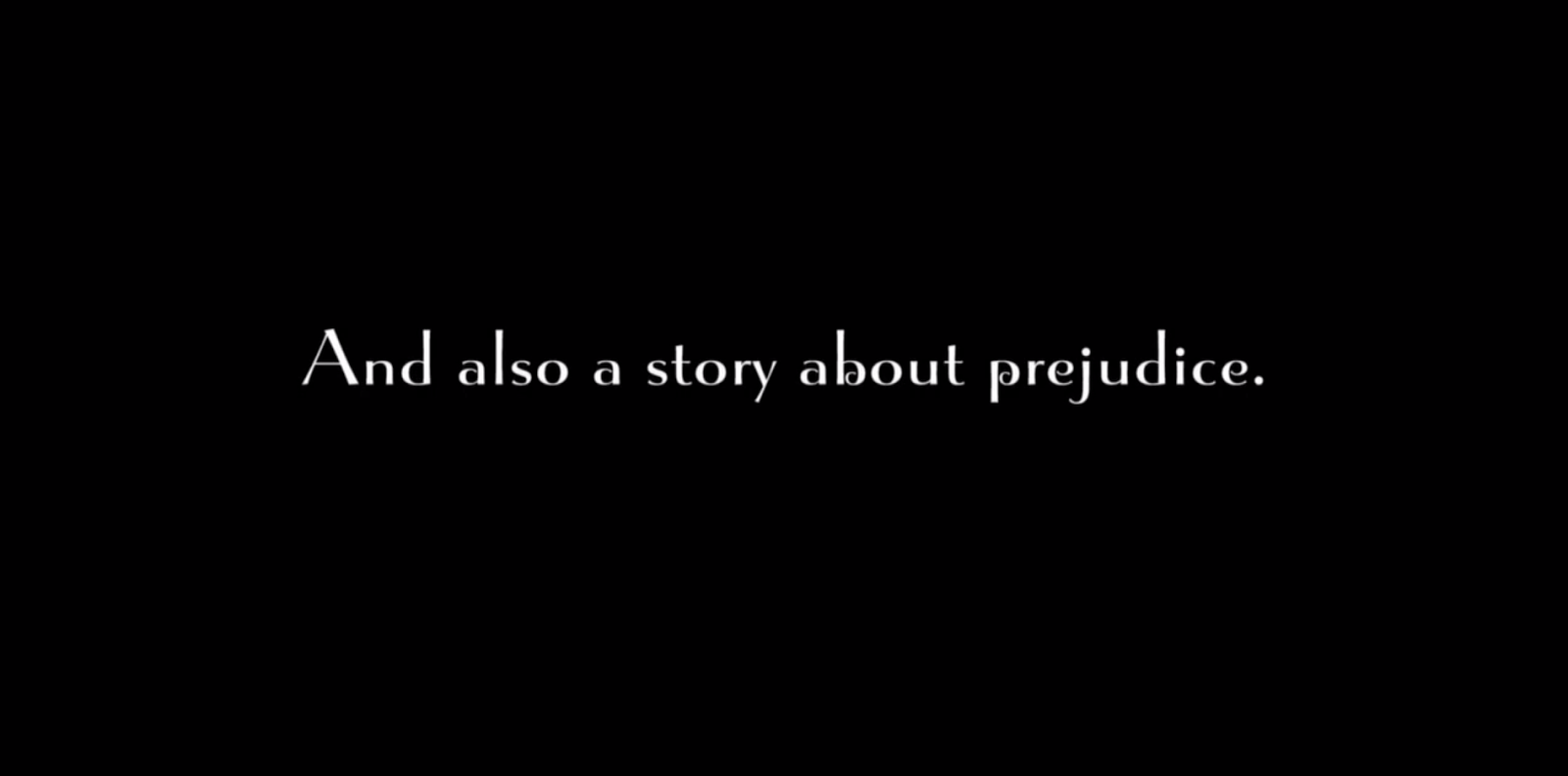
Kahn opens the film with a clever invocation of one of the ur-texts of romance. But she does it with an unexpected twist. A screen card appears with the words
We then see a shot of romance author Jane Porter, who, in an somewhat agitated voice, tells the interviewer, "I'm so proud of what I do, and what I do is so important. And it means so much to me, I don't care what critics say. I don't care."
Porter's words are immediately followed by another screen card:
After which we see romance blogger Sarah Wendell, who tells the camera, "I will have people standing above me [imitating riding on the subway], going 'You read that?'"
Though twentieth and twenty-first-century romance writers have long been plagued by derogatory stereotypes both of themselves and of the books they write, Kahn's opening statements insist that, unlike Mr. Darcy, authors of romance have no "improper pride" they must give up in order to achieve their happy endings. Instead,
Love Between the Covers shows us a community of romance writers, justly proud of their many amazing achievements, especially in light of the many prejudices they face from other writers, from society, and sometimes even from their own friends and families. Many of those prejudices are confronted and challenged by the authors in the film, while others remain tantalizingly open or unaddressed.
 |
Invoking (and poking fun at) the vilification of romance
covers by incorporating them into the film credits |
Kahn's interviewees also tackle some of the major issues that scholars and readers of romance have been grappling with for decades: What is the continuing appeal of romance as a genre? Who writes romance? Who reads it? Why is romance so looked down upon, far more than are other popular (popular as in mass market) genres? What is different about romance readers than readers of other popular fiction? And what's up with those lurid, clinch-filled covers?
While the film includes interview snippets from dozens of romance writers, romance scholars, romance industry insiders (editors, book designers, publishers, etc.), and, of course, romance readers, Kahn focuses in more tightly on five representative authors—European historical romance writer Eloisa James (otherwise known as literary scholar Mary Bly, daughter of the poet Robert Bly); African-American historical romance writer Beverly Jenkins; contemporary romance writing partners Celeste Bradley and Susan Donovan; and lesbian romance writer and publisher Radclyffe (Len Barot). The diversity of the featured authors, as well as the extra camera time given to each, encourages viewers to identify and/or empathize with these authors as people, rather than holding them as objects of derision or scorn. These authors show up again at later in the film, when other, broader questions about the genre come to the fore, preventing viewers from getting lost in a sea of talking heads.
One of those questions is "what is the continuing appeal of romance?" Kahn's interviewees provide many possible, but no definitive answers. Writer Jayne Ann Krentz argues that romance invokes archetypes that go back thousands of years, and that we learn core values from popular fiction. Blogger Sarah Wendell argues that romance is the "one place where you will consistently find women's sexuality treated fairly and positively." Author Jennifer Crusie points to the sexism underlying much of high literature, contrasting the fates of women in books she studied in college with those she reads in romance:

You know, just those toxic stories, no matter how great literature they are, they're toxic to women. If you're free and sexual and you go after what you want, you're going to die horribly. Or end up with a scarlet letter on your chest celibate for the rest of your life because boy did you screw up. But in romance fiction, it's not there. You get rewarded for going after what you want. And you can have sex without dying horribly, which I thought was a plus.
Nora Roberts and Beverly Jenkins both point to the inevitable happy ending (the H.E.A, or happily ever after that is one of the defining characteristics of the genre) as the genre's major draw. But neither the writers, nor the several scholars who appear in the film, mention issues of gender—whether romance reinforces patriarchal gender roles, as many early scholars of the genre often posited—as another potential contributor to the genre's appeal. Romance is far more popular in the west and in the south of the U.S., in red states more than in blue ones; but the film is not interested in such issues of politics and gender.
Gender is decidedly brought up when authors comment about why their genre has been the target of so much popular and scholarly criticism. Jenkins observes, "It's a fantasy, yes. But so are Arnold Schwarzenegger movies. Arnold's never killed at the end of his movies? So why beat up women, because they're reading an HEA? And guys have the same kind of HEA. Sylvester Stallone never dies." "Why is romance sneered at?" scholar and now romance editor Sarah Frantz Lyons asks. "I'm going to give the same answer everyone else has given. It's sneered at because it's written by women, for women, and it's written about women." Kahn, though, isn't interested in digging into the content of romance novels; there is little in the film about whether the genre as a whole, particular sub-genres, or even individual books promote or undercut the "empowered woman" message that the "by women, for women, about women" line that has become so ubiquitous in the romance community in the past decade asserts.
 |
Romance readers who met online share stories in person at the RWA
convention |
That sense of community—among writers, among readers, between authors and their fans, between established writers and aspiring ones—that is where Kahn's real fascination lies. "Romance has been so dismissed. So people who read it really bonded. Had to conglomerate for safety, almost. To say it's okay to read these things," author and reader Nicole Peeler notes, adding "Romance reading isn't solitary, like other reading." Romance communities are empowering for women, no matter what the books may have to say about gender relations, Kahn's film quietly but consistently asserts. The fan girl culture of romance; the pay-it-forward attitude of the majority of romance authors; the friendships and rivalries and lifetime bonds that form, primarily between women, because of their love of romance books—this is what interests Kahn, what she most wishes to convey about romance. And convey it she does, with artistry, humor, and above all, respect.
I was going to end this post with a series of memorable quotes from the film. But it's not just quite the same, reading such quotes rather than hearing them and seeing them on film. So instead, I'm going to encourage you to go out and see the film for yourself. The producers of
Love Between the Covers have hooked up with Tugg, a company that brings "on demand films to local theaters," and are in the midst of planning a series of 50-100 screenings of
Love across the globe this coming fall and winter. They have been working to team up scholars, readers, and librarians with local romance writers to host such screenings.
If you are interested in bringing the film to a movie theater near you, here is the relevant contact information: