Showing posts with label sexual attraction. Show all posts

Friday, February 27, 2015

Cocky Self-Confidence


His hand twitched against his side. Emma licked her lips. "Touch yourself," she repeated, more a whisper than an order, but he finally obeyed. His fingers, dark against his belly, slide down and curved around the dusky skin of his shaft. — Victoria Dahl, A Rake's Guide to Pleasure


Many romance novels come and go without leaving a memorable trace in my mind. But I can still remember the shock with which I read the scene in Victoria Dahl's steamy Victorian historical romance, A Rake's Guide to Pleasure, from which the above quote is taken. Emma Jensen has wormed her way into ton society, masquerading as the Dowager Lady Denmore, in order to wager and win enough at the card tables to secure herself a competence large enough to retire from society on. But her attraction to the rakish Duke of Somerhart has proven a distraction from her gambling. At a high-stakes house party, she finds herself spending less time gambling and more time negotiating a sexual power game with Hart. After realizing how much Emma is aroused by being told what to do, sexually, Hart challenges her to try out the opposite role: "You take control, Emma.... Take control of me. Come to me" (100).

Emma, despite her better judgment, takes up Hart's challenge. But the scene doesn't quite play out the way Hart expected. Emma doesn't tell him to do anything sexual to her; instead, she commands him to perform for her. "Touch yourself," she orders him, but refuses to step any closer to the bed in which he lies. She wants to watch him, to actually witness the act with which he taunted during their first sexual encounter: "I thought about this last night. Dreamed of your taste, of you pressing yourself to my mouth. I pleasured myself to this fantasy" (83). His fantasy turned her into an object of desire; hers, not just in mind but in the flesh, turns the tables, turning Hart into the object of Emma's.

Dahl makes it clear that Hart objects to being so-objectified. When Emma first issues her command, he outright refuses. Only after he makes a move to leave his bed, and she threatens to leave his room altogether, does Hart "finally obey." And when he reaches his climax, he's not just sexually satisfied; he's shatteringly angry, snarling, "Get the hell out of my room. Now" (111).

The next morning, Hart finds himself embarrassed by having ceded control, worried that Emma will tattle to others about "his little show" (112). Hart "wanted to take back the night, or at least turn it into something else. Something he controlled, despite his challenge to Emma. Somehow this seemed so much worse than being caught ravishing a woman in the card room" (113). A man sexually self-pleasuring himself in the privacy of his own rooms is fine. A man caught tupping a woman in public is not so bad, either. But a man touching himself in front of a woman, performing not just for his own pleasure but for hers, is something for which Hart fears he'll be "snickered at" and "turned into a freak" for, if word gets around (113).

I can't remember reading another such scene, one in which a man touches his own penis, in a historical romance, or in any romance, published around the same time (Rake first came out in 2009). But now, only six years later, such scenes seem to be popping up with far more regularity. Perhaps it is only because I've been reading more erotic romance of late, but in my reading of late, I've been noticing more and more romance sex scenes in which men take their own cocks in hand. Not just to guide them into various female (or male) orifices, but as one of the many possible sexual touches that play a part in longer sexual encounters. And unlike Duke Somerhart, the men in such scenes rarely think of touching themselves in front of a woman as something shameful, something freakish. Instead, they do it with self-confidence. Such acts are presented as part and parcel of a man's acceptance of his own sexuality, his own body. And an acceptance of, even a delight in, a sexual partner's being turned on by such a "show."

Am I just imagining things, or have you noticed such a trend, too? If so, what do you make of it?


Friday, September 20, 2013

The Scent of Love


He was tall and strong, and he smelled like fabric softener and wine and man. — Ruthie Knox, Along Came Trouble

      He smelled like sweat and horse and man. — Eloisa James, Winning the Wallflower

      He smelled like bay rum and male, with a sweet hint of pipe tobacco. — Kate Cross, Heart of Brass


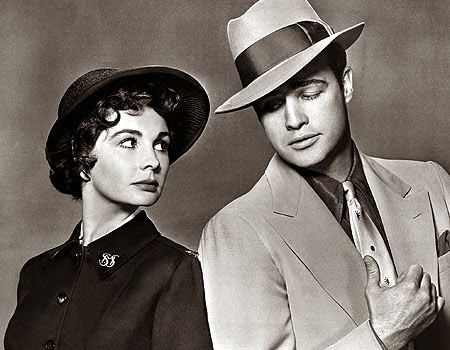
I've been thinking a lot about chemistry of late. Not Chemistry with a capital "C," the high school class kind. No, the kind that Sky Masterson of Guys and Dolls challenges prim Sergeant Sarah Brown with, after Sarah tells him that she'll recognize the right man for her by the outward signs of his steadiness and moral fiber. In contrast to Sarah, Skye asserts:


     Mine will come as a surprise to me
     Mine I leave to chance and chemistry.

Just what is this chemistry, this invisible something that makes your ears prick, makes your attention hone in on one specific person, and not another? Have scientists been able to find evidence for it, or is it simply a myth? And if there is a scientific basis for sexual chemistry, is the science reflected in romance fiction?

Interestingly, not a lot of research has been done on the topic of sexual chemistry, according to Dr. Tim Loving, a relationship researcher and blogger at Science of Relationships. Many scientists have put forth interesting hypotheses pointing to general preferences for certain characteristics that are theorized to signal genetically positive traits, traits that will help the species propagate: a low waist-to-hip ratio for women (good for bearing children), broad shoulders and strong jaws for men (signs of higher testosterone = good protection for said children). Yet few studies look at individual attraction, why one particular person is attracted to another particular person, as opposed to the other twenty people in the room.

Interestingly, the one line of study about sexual chemistry that's been explored by multiple researchers examines not the visual, which many assume is the most important sense in attraction, but the olfactory. In 1995, Swiss biologist Claus Wedekind and his colleagues published the results of what has now come to be known as the "sweaty t-shirt study."* Wedekind asked 44 college-aged men to wear a new t-shirt for two straight nights, providing them with odor-free toiletries so that only their own scents would mark the shirts. After collecting the shirts, they asked 49 women to smell them, and asked each to identify the ones they found most appealing. The results were quite intriguing. Far more often than chance would allow, women selected the t-shirts of men who were immunologically dissimilar to themselves. Mating with men with whom they did not share MHC (major histocompatibility complex) genes makes sense from an evolutionary standpoint; children of such unions will be more disease-resistant than children of parents who share most of the same 100+ MHC genes, and so will have a greater chance of survival.

In heterosexual romance novels, the expression of olfactory sexual chemistry typically comes via the three-fold scent description. Two scents indicative of a romance hero's personality or environment are added to a third smell, that of "man," "male," or occasionally, simply "masculinity" (see epigraphs above). Not "a" man or "a" male, but a generic, all-encompassing odor indicating a person of the opposite sex.

A 2009 study** has shown that in general men's body odors smell differently than women's (apparently women smell more like onions or grapefruit, while men smell more like stinky cheese, even though women generally have higher levels of a sulfur-containing compound in their sweat—go figure). And a 2006 study*** suggests that women are more attracted to the scent of men with low cortisol levels (the stress hormone), and, except during their fertile period, to men with lower testosterone levels.

Why do romance writers emphasize these aspects of a hero's scent (not the stinky-cheese aspect, but the difference between male and female smells, or the presumably testosterone "male" scent), rather than the more interesting one that suggests we might find some specific individuals' body odor more attractive than the odor of others?

The three-scent description is so common that it's become a bit of a joke among romance readers. But even well-regarded romance authors (see epigraphs) continue to deploy it. What would happen if romance writers stopped fetishizing the scent of the generalized "male" and instead called attention to the way that a specific individual makes a heroine's nose cilia and chemoreceptors jump to attention?


Can you recall any memorable scent-descriptions from your romance reading? Is there a difference between how heroes and heroines' scents are described?


*Wedekind, C, et al. (1995) "MHC-dependent preferences in humans." Proceedings of the Royal Society of London 260: 245-49.

** Troccaz, M. et al. (2009) "Gender-Specific Differences Between the Concentrations of Nonvolatile (R)/(S)-3-Methyl-3-Sulfanylhexan-1-Ol and (R)/(S)-3-Hydroxy-3-Methyl-Hexanoic Acid Odor Precursors in Axillary Secretions." Chemical Senses 34.3: 203-210. Here's a link to a summary of the research written in words the non-scientist can understand.


Photo/Illustration credits:
Jean Simmons & Marlon Brando as Sarah Brown and Sky Masterson: cerebralcereal
Nose to Nose: Girlschase.com