Friday, December 28, 2018

Seriously Gross and Anti-Feminist?

Addendum 1/8/19:
This blog post offended many of Snyder's readers and fans, who saw it as an attack on the author. 


It was not my intention to suggest that Snyder had written Tikka Chance on Me, or any line in that book, out of "petty vengeance" towards me, as Snyder felt called to explain on Twitter. I apologize to both the author and to her fans and readers.

When so many of people have such a negative reaction to something I've written, I owe it to them, and to myself, to go back and reexamine it. And now, having done that, to point out the places where I fucked up, and apologize for them. And to ask myself questions, where I'm not sure if, or how, I offended. Fucking up, still, but fucking up with some humility. I've done so in the comments below.

This was not an auspicious return to blogging. I will try to do better in the coming year.

I always appreciate criticism and comments that help me learn and grow, especially on the difficult issues of race. But no one should feel that they have to take the time and energy to educate me unless they choose to. I pledge to work harder to educate myself.


I hadn't been this passionate about something in years. Once upon a time, I'd wanted to be an anthropologist. To travel the world and study indigenous cultures—especially some of the Adivasi communities in India. I'd committed to that, even with all the partying. But then I came home. I gave up. I stopped dreaming. It was seriously gross and antifeminist to credit a man with me coming alive again, but I couldn't deny the truth. Trucker Carrigan had changed me. —Suleikha Snyder, Tikka Chance on Me


The fall and early winter of 2018 have not been a good time for me and the RNFF blog. I've still been reading romances, and have written many a review or general post in my head that has never made it down to the keyboard. But the pairing of family health issues with a mild but still unpleasant case of seasonal depression brought on by the dark, rain-filled end of the year, perimenopausal PMDD, and the sorry political state of my country made sitting down at the computer and putting words to screen feel more a crushing burden than a soul-lightening joy. Hence the blog silence for the past two months.

I don't know if I've managed to shake off the doldrums completely yet, but after I read the above passage in Suleikah Snyder's latest novella, Tikka Chance on Me, I felt the urge for the first time in a while to try to grapple with the often contested intersections of genre and gender. Is it "seriously gross and antifeminist" for Snyder's character, American desi Pinky Grover, to credit Trucker Carrigan, unlikely guy she's been lusting after, for her "coming alive again"?

After high school, Pinky left her small Indiana hometown for Chicago, easily balancing both of the city's intellectual and amorous opportunities by working toward a BA, and then a PhD, at the University of Chicago while simultaneously exploring her sexuality with many a glorious and wild partner. But two years ago, she'd dropped both to return to Eastville after her mother was diagnosed with Stage One breast cancer. Though her mom is well on the road to recovery, Pinky at the start of this story finds herself listless, unmotivated, not at all eager to return to her more expansive life in the big city. Until, that is, she begins a torrid affair with Trucker Carrigan, "six feet three inches of pure unadulterated trouble. I knew it, he knew it, everybody in town knew it. He'd been born bad and grown up worse" (Kindle Loc 34).

Though he, like Pinky, left town after high school, Trucker, too, has washed back up again in Eastville.  Now a leading member of the Eastville Eagles Motorcycle "Club," Trucker is deeply involved in the gang's less than legal activities. Though Trucker is working-class Irish to Pinky's middle-class Punjabi, he has a curious taste for Indian food, and brings his club members to Pinky's family's restaurant, the Taj Mahal, the only Indian restaurant within fifty miles, often enough that the Eagles have their own table there. For months, Pinky's been eyeing Trucker, and Trucker's been eyeing her right back, but neither has done anything about it.

Until a chance encounter at a local Wal-mart leads to some unexpected insights into each other's characters. Followed by a hotter-than-hot bout of sex in the cab of Trucker's pickup. Followed by another bout of physically and emotionally intense sex in a motel room.

Followed by Pinky's insightful realization that Trucker may not be quite who he appears to be...

It is at this point in the story, after the hot banging and the realization that any relationship between them has a clear end date, that Pinky has the insight quoted at the start of this post. Though Pinky goes on to tell the reader "I didn't think it was arrogant to say that I'd changed him, too," does she truly believe that it is "gross and unfeminist" to "credit a man with making [her] come alive again"? Or is she speaking to an implied feminist critic, negatively judging her for giving such credit to a member of the opposite sex?

The famous second-wage feminist adage asserts that "A woman without a man is like a fish without a bicycle." But does the inverse also apply? Is a woman with a man, a woman who allows a man to influence her, make her come alive, just a fish with a bicycle, an oddity, a freak? Is she "gross"? "Unfeminist"?

Suleikha Snyder and RNFF have a difficult history. In the early days of the blog, I wrote and published a review of her 2014 Bollywood romance, Bollywood and the BeastWhile I intended that review to be positive, I was also worried about proving my bona fides as a literary critic, feeling I had to validate the existence of the blog and my authority to write about romance. That need to show off my knowledge led me to use postcolonial literary theory in a problematic, and racist, manner. Said comment had a negative impact on Snyder. I later discovered that Snyder had written a blog post about the racism she and other romance writers of color experience, and linked to my blog as an example of one of many moments of racist silencing and criticism of romance writers of color.

Given this history, I can't help but think that one iteration of the feminist critic to whom the imaginary Pinky in Snyder's latest story might be speaking is me.

But I'm not inclined to adopt the role of this implied feminist critic, a critic who would call a woman  "gross" and "unfeminist" when she recognizes and acknowledges that she is being pulled out of an emotional funk by her emerging feelings for a man. In fact, the comment makes me want to jump up and down in frustration, and point to the gap between Millennials who say they believe in gender equality (55-66%, depending on the race of the respondent) and the far lower percentage who actually identify as feminist (13-20%). As Cathy Cohen, the University of Chicago political science professor who conducted the genFORW>RD study from which these figures were drawn, notes, "the media has narrated a pretty rigid understanding of feminism" (Marketplace interview), an understanding that has somehow detached "feminism" from its central raison d'ĂȘtre of gaining rights and equality for women, and made Millenials wary of adopting the name for their own.


Source: genFORW>RD


Fifty+ years after the rise of second-wave feminism, it seems that many a woman has forgotten, or never been taught, about the historical context in which second-wave feminism first arose. It rose at a very particular moment in time—as a reaction against post-WWII culture, with its widespread idealization of a non-working mother and a wage-earning father. In fact Betty Friedan's The Feminine Mystique (1963), which first gave voice to second-wave feminism, argues that American media in the 1930s featured far more positive depictions of working women than did the media of the 1950s. Friedan pointed to the limitations of the 1950's belief that a woman's only path to fulfillment was through being a housewife and a mother. Her book's conclusion advises women to stop viewing housework as a career; to stop expecting motherhood and marriage to fulfill all their needs; and to search for meaningful work that draws on their intellectual, as well as their emotional, abilities. It never urges heterosexual women to throw out their boyfriends and husbands with the bicycles and fish, to cut all heterosexual relationships out of their lives. It doesn't call married women, or women in heterosexual relationships, gross or accuse such women of not toeing the proper feminist line. Later more radical iterations of feminism might espouse a feminist separatism, urging women to cut men from their lives, but such ideologies were always in the feminist minority.

If any woman without a man is like every fish without a bicycle, doesn't that make all heterosexual romance, built upon the assumption that the two (or more) people involved in a developing romantic relationship exert a positive influence on one another, inherently anti-feminist? Doesn't that make any real-life heterosexual woman anti-feminist?

Snyder's own novel argues against Pinky's momentary negative self-labeling. For while she may be in a temporary funk at novel's start, she's clearly not a woman who views marriage, motherhood, and housework (or working in her parents' restaurant) as the only fulfilling career option available to her. Nor does she expect her relationship with Trucker to fulfill all her needs. And near the story's end, she's back in Chicago, once again pursuing her intellectual interests—initially on her own, without Trucker.

But not for long...

Earlier in the story, Pinky actually provides the best answer to those who would falsely pit feminism against heterosexual romance. Trucker says to her: "I could do this all night. Hold you in my arms. But you're not here for that, are you? You're here to be fucked by the bad boy." Pinky thinks to herself, "The words were a low growl against my jaw. And I wasn't sure who he was mad at. Me or himself." And then challenges his assumption: "Why can't it be both? Can't you hold me and fuck me?" (352)

You can work towards gender equality and be in a heterosexual romantic relationship. Both and, not either/or.

And you can call yourself a feminist, too.


Photo credits:
Fish without a bicycle shirt: Feminist apparel


Friday, October 5, 2018

A Dark Heroine for Dark Times: Victoria Helen Stone's JANE DOE

What's the next word that pops into your head after someone says the word "sociopath"? I'm betting that "romance" or "heroine" are not likely to make your short list.

And perhaps it's not quite fair to term Victoria Helen Stone's latest novel, Jane Doe, a romance. A work of suspense, definitely. A novel of romantic suspense, yes—but only if you welcome a work in that sub-genre that doesn't depend on putting a female body in danger for its major thrills. Jane Doe starts, in fact, after violence has already been visited upon a female body, the body of the narrator's best friend, Meg. Meg has been subject to both verbal and physical abuse: the former at the hands of her manipulative former boyfriend, Steven Hepsworth; the latter at her own hands, through the one act of control Meg can take: killing herself.

Bringing Meg back isn't possible. But avenging her death certainly is, especially for a person like Jane. When Jane was a kid, she knew she was different from most people. Especially her emotional, melodramatic family. As Jane explains, she didn't feel sorry for her older brother when he was sent to jail for selling stolen goods out of the back of her car, like her parents and grandmother did; it only seemed logical. Being white, Jane reasoned, her brother's sentence was far more lenient than those given out to many men of color in the same situation, so why complain? Besides, she knew what a lazy, shiftless guy he was. Hadn't he only gotten what he deserved? "Nasty, cold-blooded, selfish, grasping, uppity, ungrateful goddamn little bitch," her family replies (37).

And Jane can't disagree. She doesn't feel emotions, unlike most other people do, or rather, she has some emotions, but she "can usually choose when to feel them. And more important, I choose when not to" (5). A situation stemming in part from her own childhood, raised by careless, selfish, at times abusive parents who allowed her to be abused by others as well.

Jane didn't understand what she terms her "disability" until she took a Psychology elective her senior year of high school, and came across the concept of sociopathy, or what the current DSM Manual labels "Antisocial Personality Disorder." Reading about all the serial killers and other criminals labeled as sociopaths, Jane was at first upset by her discovery. But further research reassured her: "Most people like me don't grow up to be killers. We lie and manipulate and take advantage, but usually that just makes us great at business. Yay for capitalism" (37).

One feeling Jane does allow herself is loyalty to Meg, the single person who stood as her friend despite her oddball lack of social graces. And so after Meg takes her own life after years of being alternately praised and then denigrated by Steven, Jane decides to take revenge into her own hands. Who better than a sociopath to bring down a sexist, manipulative, self-righteous man?

To that end, Jane takes a leave of absence from her high-powered financial job in Malaysia and scores a job working in data entry in Minneapolis—at an office whose supervisor just happens to be Steven. Knowing just what kind of woman Stephen goes for from all her long phone conversations with an emotionally upset Meg, Jane dons the mask of shy, uncertain, easily controlled girl and performs it for Stephen's benefit.

And Steven is instantly smitten.

Steven, of course, us completely unaware that all the while Jane is narrating a running commentary about Steven's own manipulations, selfishness, and lack of empathy. Is Jane the real sociopath, here? Or is Steven?

Jane's plan is to worm her way into Steven's life, even to the extent of becoming his girlfriend, so that she can get close enough to find out his "weakest point" and then exploit it, so that he will "live in misery for years" (39). As Jane explains it:

This relationship will be tedious and nearly unbearable, but the end will justify the means. Maybe I'll destroy his family. Maybe I'll set him up for embezzlement. Maybe I'll kill him. I'll find what's most important to him and then I'll take it away. However that plays out is fine with me.  (29)

By acting as if she has a Meg-like personality, Jane shows the reader rather than just tells what it is that a man like Stephen needs from a woman—and worse, what a woman has to hide and suppress of her own thoughts, needs, and desires in order to prove herself "worthy" of a man like Stephen. Jane's acerbic commentary only adds to the biting gender critique:

I nod but let him see that I'm shaken by the very idea of putting out. A woman shouldn't have her own sexual needs. My role is to resist. That makes me a nice girl. (17)

After all, everyone knows that women are responsible for how men behave. If we're not careful, they might decide to take what they want. They can't help it. But somehow I'm the one with the psychological impairment. (61)

In the first years of our friendship, I was fascinated by the way Meg interacted with me. She always made herself smaller, and they always loved it. At first I admired it as manipulation, but I later realized that once she'd established herself as small, she couldn't make herself bigger again.... She would shrug and say she felt shy with men she liked, but that wasn't it. It wasn't shyness. It was fading. She dimmed her light to make a certain kind of man feel vibrant. And it worked. (71-72)

But during the early days of her campaign against Stephen, Jane runs into someone she knows from college—an old boyfriend, Luke, who seems eager to take up with her again. As Jane and Luke begin to become reacquainted, the reader is again show the difference between a man who uses a woman for his own benefit, and a man who wants to engage with a romantic partner for their mutual pleasure and joy.

Will Jane kill Stephen? Will she dig up some good dirt on him, and share it with friends, family, and members of his father's church? Or will Luke find out about her vengeance plot and insist she stop or he'll leave her? Or might Luke convince her that turning the other cheek is better than demanding an eye for an eye?

With so many commentators today suggesting that the #metoo movement has unleashed indiscriminate female anger, anger uncaring of the innocence or guilt of the men it targets, it seems a stroke of genius to create an female figure of vengeance who is not driven at all by emotions.

A fascinating, on-point inversion of the woman-as-crazy-stalker trope familiar from the film Fatal Attraction and its many followers, replacing the misogyny of the male infidelity morality tale with a razor-sharp critique of the misogyny inherent in patriarchy.


Jane Doe
Lake Union Publishing, 2018


Thursday, September 27, 2018

Adjunct to a Media Storm: Yale, Kavanaugh, and reporting sexual misconduct

I've been getting a lot of phone calls from the media the past two weeks. Not, alas, because the press has discovered a sudden interest in romance novels. But because I attended Yale in the 1980s, and lived in the same dorm freshman year as the current nominee to the Supreme Court, Brett Kavanaugh. At the time, Yale had about 10,000 students, 5,000 undergrads, 1200 of them first years. With 12 residential colleges (think dorms, but each with its own culture, governance, and community), that meant about 100 freshman were assigned to share the same peer group. Each cohort shared a dorm on Old Campus, the quad where the majority of first years lived.

Lawrance Hall, Old Campus, Yale University
I became good friends with a handful of the 100 who were assigned, like me, to Ezra Stiles College, and who all lived in Old Campus's Lawrance Hall in the fall of 1983 and spring of 1984. I was nodding acquaintances with many of the others. But while I recognize both Kavanaugh's name and photograph today, I never numbered him among either of those two groups back then.

Most of the reporters lose interest after I tell them that I didn't really know Kavanaugh, and wasn't part of his friend group at the time.

Others, though, have been asking more generally what it was like to be at Yale in the mid 80s. "Is this the Yale you remember?" "Did anyone talk to students about sexual harassment?" "Would you have known how to report it if something like that happened to you?" "Did the sexual misbehavior at the party that purportedly happened one entryway over from yours in Lawrance Hall seem probable? Likely?"

All these questions have got me thinking a lot about those early college days. And talking to a lot of my college friends about what it was like then, and how things are different (or the same) now. Especially when it comes to issues of gender.

There is a huge difference between how Yale dealt with rape and sexual harassment and misbehavior then, and how it does now. Date rape, or acquaintance rape, was a relatively new concept in the public consciousness when we arrived on campus in September of 1983. My spouse (who is also Stiles '87) remembered reading an article about the concept in the Yale Daily News sometime during our first or second year. His memory set me off on a search of the YDN archives, which turned up this article, the first of a two-part series, in the February 28, 1984 edition: "Victims talk about acquaintance rape." The article opens with these disturbing words:

     There are no full statistics available on rape between students at Yale anywhere—not at University Health Services (UHS), not with the Yale Police, and not in the Yale Dean's office. There is no mention of rape in the 1983-84 Undergraduate Regulations. There is no procedure for a victim to file a formal complaint of rape with the University.
     But there is rape between students at Yale. (page 1)

If there were no procedures for reporting rape, there were certainly no procedures for reporting sexual harassment or sexual misconduct of the type Deborah Ramirez asserts she experienced at the hands of several Yale men in Lawrence Hall.

To the best of my memory, no one told any of us during our early days on campus what to do if someone sexually assaulted us.

Many of us female undergrads had been raised in homes or in cultures where the idea of harassment or assault was never broached, either. Or, if it was, it was framed as the girl's/woman's fault. As the director of the Rape Crisis Services at the New Haven YWCA reports in the YDN article, "When a rape is committed by an acquaintance, it is sometimes difficult for the victim to convince others as well as herself that it was a rape."

I don't think it likely that an incident such as the one Deborah Ramirez describes would have been "the talk of the campus," as Kavanaugh recently opined in an interview with FOX News. And even if it had, who would have known what to do about it?

Nor does it seem at all surprising that Ramirez would not have talked about the incident she describes occurring with anyone else, friends or people in authority. The YDN article features the stories of two Yale women who talked about being raped by fellow students, mentioning that one made a formal complaint about the incident to the Yale College Executive Board, "which is comprised of Yale students, faculty, and professors" and which "hears complaints ranging from library offenses to assault and coercion" (3). Part two of the article, in the 2/29/84 edition, describes the adjudication of that case. "Donald" (names were changed in the article), the alleged rapist, was determined to be guilty by the Board; "as punishment, they banned him from living on campus and participating in any college ceremonies, including graduation, and suspended his diploma for six months." Allison asked that "Donald" be forced to attend counseling sessions, but the Board had no authority to order such a thing.

And at Commencement later that spring, Allison saw Donald receiving his diploma. When she contacted the Yale Dean's Office, she was told that "Donald" had later appealed the Board's decision, claiming that "since one member of the Executive Committee had been assaulted in the past, this had biased that Committee member and the Committee, against him," "Allison" was told. Because of this, "Donald's" punishment was lifted.

No one informed Allison of either of Donald's appeal, or its result.

The article ends with a call for Yale to make "a greater effort to deal with the problem of rape between students" (3): first, acknowledging that it happens; second, setting up a special Committee to address the issue; and third, that they inform students of how to report such acts.

Is it any wonder in such an environment that a young college woman would not report a less severe act of sexual misconduct?


For those of you who attended college in the 1980s, do you remember if/what you were told during your first year orientation about sexual harassment and assault? Did your college have a procedure in place to report rape? Sexual misconduct and/or harassment? When did it institute one?

And what is the earliest romance novel you can remember that deals with sexual harassment/misbehavior in a college setting?


Photo credits:
Lawrance Hall: Wikiwand
"Considering Seeking Help": Yale SHARE

Friday, September 21, 2018

Feminism and the Beast: Juliet Marillier's HEART'S BLOOD

Feminism has long had a hate relationship with the fairy tale "Beauty and the Beast." From the animal bridegroom folktale, which Frenchwoman Suzanne de Villeneuve drew on for the first written version of "La Belle et La BĂȘte" in 1740, to the most recent film version of B&B by Disney, feminist literary and cultural critics have often written about the not-so-hidden messages, messages encourage girls and women to stay with and even love "beastly" (i.e. abusive) men, that seem inherent in this trope.

Which is why it is such a pleasure to read contemporary novels or stories penned by authors who draw on the trope, but do so with a clear aim of subverting its sexism. My favorite short story of this type has long been Angela Carter's "The Tiger's Bride," from her 1979 collection The Bloody Chamber and Other Adult Tales, in which it is the beauty who embraces the beastly rather than the beast who is transformed into a beauty. And I've enjoyed novel-length B&B and animal bridegroom novel retellings, too, both for young adults (Robin McKinley's Beauty [1978]; S. Jae Jones' Wintersong [2017]) and for adult romance readers (Mary Balogh's Lord Carew's Bride [1995]; Elizabeth Hoyt's To Beguile a Beast [2009]), novels that draw into question some of the central assumptions of the more sexist versions of the B&B trope.

My new favorite, though, might just be Juliet Marillier's 2009 retelling, Heart's Blood.

Set in a 12th century Ireland rife with magic, Marillier's novel opens with heroine Caitrin fleeing toward the beast's home not to save a father, but instead out of grief for one. Berach, a scribe, taught his daughter Caitrin his trade, and the two spent many an hour working together, bent over quill and scroll. But after Berach's sudden death, Caitrin falls into a deep depression, during which distant cousins come and claim her home. Showing a kind face to the town, but an abusive one to Caitrin, Cillian and his mother Ita insult and physically abuse Caitrin until she has internalized all their aspersions:

You're nothing, her dream voice reminded her. You're nobody. Your father shouldn't have filled your head with wild ideas and impossible aspirations.... Bel glad you have responsible kinsfolk to take care of you, Caitrin. It's not as if you've demonstrated an ability to look after yourself since your father died. (12).

When Cillian insists that he and Caitrin wed, however, Caitrin knows she can remain no longer in her once safe home. And so she flees, with only a change of clothes and a small box containing the tools of her trade. And the hopes that she can somehow find her way back to the "old Caitrin, the confident, serene one," rather than the person she has become since her father's death, the person who could not find the power or the will to speak up in the face of Cillian and Ita's abuse (62).

The folk of a far-western settlement Caitrin lands in warn her against accepting the post as scribe at the castle of their local chieftain—"I can't think of one good thing to say about the man, crooked, miserable parasite that he is" (10). But Caitrin, fearful of a pursuing Cillian, won't let herself belief that their stories of a 100-year curse, a horrible lord, a dog large enough to eat a fully grown ram in a single bite, and tiny beings that whispered in traveler's ears and led the off the path are anything more than fearful exaggeration. Caitrin is not coerced into going to the beast's lair to save her father, as in most Beauty and the Beast retellings; she accepts a job willingly, a job which she hopes will help her find herself.

When Caitrin arrives at Whistling Tor, it is to discover that each and every story is true—at least, in its own way. Anluan, the young chieftain, limps, has the use of only one arm, and has a strangely unsymmetrical face. Caitrin's first sight of Anluan clearly places him in the "Beast" role: "There was an odd beauty in his isolation and his sadness, like that of a forlorn prince ensorcelled by a wicked enchantress, or a traveler lost forever in a world far from home." But Caitrin immediately chastises herself for placing him in such a traditional role: "I must stop being so fanciful. Less than a day here, and already I was inventing wild stories about the folk of the house. This was no enchanted prince, just an ill-tempered chieftain with no manners" (45).

Anluan has tragic reasons for his temper, his physical disabilities, and for his lack of social graces, reasons which are gradually revealed to Caitrin over the course of her weeks at the Tor. And though Anluan often falls prey to abrupt bouts of verbal anger, he never acts violently or harms the handful of faithful retainers who remain. What he does lack is hope—the hope that things might change, the hope that the dark cloud under which he has been living might ever abate. And hope is the one thing of which Caitrin will not let go. It is not physical beastliness, then, but despair, which it will be Caitrin's task to banish—not just from Anluan, but from herself.

Caitrin's job at Whistling Tor is to transcribe the documents of Anluan's ancestor Nechtan, searching for a spell which Nechtan apparently could never find. Not a spell to summon dark power, but rather to disperse it: to send the whispering denizens of the forest, the dark legacy Nechtan's willingness to dabble in black sorcery in order to gain power over his rivals, back from whence they were unnaturally summoned. Many of Nechtan's notes are in Latin, a language which Anluan's father did not have the chance to teach him before he took his life when Anluan was only nine, the most recent of a string of early deaths among the chieftain's ancestors.

The task must be completed by the end of summer, Anluan insists, without ever telling Caitrin why. But when rumors of invading Normans begin to swirl, and acts of hurtful vandalism begin to plague the Tor, the search grows ever more urgent. Caitrin is free to leave at any time; she is no prisoner. And she certainly doesn't long to return home, at least, not to a family that no longer exists. But after receiving a threatening emissary from a Norman lord, Anluan insists on sending Caitrin away. Because he doesn't love her? Or because he loves her too much?

(Spoiler: "At last I begin to understand why my father acted as I did. To lose you is to spill my heat's blood. I do not know if I can bear the pain" [315].)

Again, unlike the traditional B&B story, Caitrin's time "home" is not about proving how bad home really is when compared to the luxury of "away." Rather, it is about conquering her particular monster, banishing those who made her feel less than her true self, and remaking her once destroyed family. A task she undertakes not on her own, but with the help of allies she meets during her journey home.

Community and hope, rather than isolation, doubt, and despair, are what Caitrin needs in order to reclaim her birthright—and then, to claim her place by Anluan's side while he faces his own worst fears.


What are your favorite Beauty and the Beast retellings?


Photo credits:
Castle: Geni
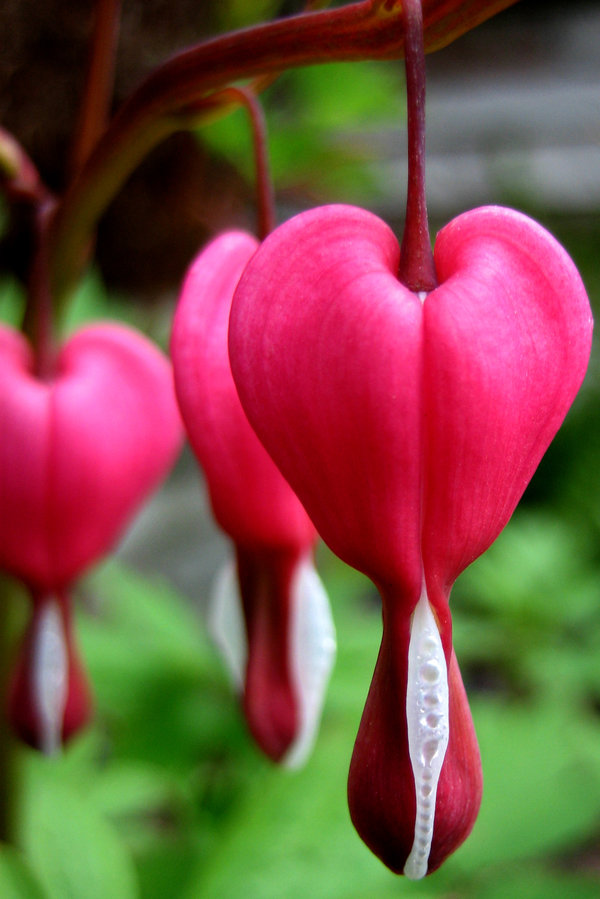
Bleeding heart: Moonbeam 13, Deviant Art


Heart's Blood
Tor, 2009

Tuesday, September 18, 2018

Encyclopedia of Romance Fiction

Just a short post today, to announce the publication of Kristin Ramsdell's Encyclopedia of Romance Fiction, to which I am thrilled to be a contributor (the actual pub date is September 30, but I just got my copy in the mail today and wanted to give it a shout out). The first encyclopedia devoted to romance fiction, this volume should prove an invaluable resource to those wanting to learn more about the genre, including readers with either an academic or personal interest in the topic.


From the publisher's blurb:

Included are alphabetically arranged reference entries on significant authors along with works, themes, and other topics. The articles are written by scholars, librarians, and industry professionals with a deep knowledge of the genre and so provide a thorough understanding of the subject. An index provides easy access to information within the entries, and bibliographies at the end of each entry, a general bibliography, and a suggested romance reading list allow for further study of the genre.


And this, from a Booklist review:

"What makes this single volume stand out is the range of scholarly issues (feminism, cultural issues) addressed in accessible language with clearly cited sources. . . . This will be a welcome addition to any reference collection, but it is essential to those that serve students of literature and women's studies."

The Encyclopedia is a bit on the pricey side, but I'm guessing that most academic libraries and even some public ones will order a copy, making it accessible to many readers.

The entries I wrote:
• Arranged marriage plot
• Domestic sentimentalists
Pamela
• Rape in romance
• Romance readers
• Royal Ascot Awards
• Samuel Richardson
• YA Romance

Looking back in my files, I see that I initially researched these entries way back in 2012. I think I might have included different examples if I had written the entries more recently, but I'm still very happy with the way they came out. My thanks to Kristen Ramsdell for her excellent editorial eye.

Looking forward to reading the entries from my fellow contributors, including Wendy Crutcher, jay Dixon, Erin Fry, An Goris, Laurie Kahn, Eric Murphy Selinger, and many other scholars, librarians, and industry professionals.

If you pick up a copy for yourself, or browse through one in your local or college library, let me know what you think!


Kristin Ramsdell, editor
Greenwood, 2018

Tuesday, September 11, 2018

Working Romance: Talia Hibbert's UNTOUCHABLE and Lola Keeley's THE MUSIC AND THE MIRROR

RNFF is back from a summer hiatus, and is thinking about romance in the workplace. I just read a contemporary romance that I had major problems in the way it addressed (or waved its hands at, instead of addressing) issues of power and consent in a employer/employee setting. Or in this case, a college professor/undergraduate student relationship. No matter than the professor was actually a graduate student just on the verge of defending her dissertation, and the student was a professional athlete going back to school to earn the final credits for his bachelor's degree after leaving college to go pro years earlier. The two are instantly drawn to one another even before their first class together, and soon start socializing outside of class, and then burning up the sheets between classes. Neither one thinks of solutions to the forbidden romance: transferring to a different section; dropping the class altogether; informing a supervisor about the relationship, and asking for a different grad student or professor to grade the student's work. They just keep sleeping together, and dismiss the idea that there is anything problematic about the situation. Did the author think that because the woman was the person in power, and the man in the subordinate position, that the situation wasn't worth fretting about? If so, she might want to check out this recent New York Times article about a female professor who has been reprimanded for harassing a male student.

Even if the #metoo and #TimesUp movements have made workplace romances less common (a February 2018 CareerBuilders' survey cites the figure at 36%, down from 41% in 2017 and 40% in 2008), a sizable number of Americans still meet romantic partners at the office. Can romance novels depict such romances, but in a way that takes into account the concerns raised by #metoo and #TimesUp?

In Talia Hibbert's Untouchable, the workplace setting isn't an office, but a home. Thirty year old Hannah Kabbah always dreamed of a job working with children. But a conviction for maliciously damaging the car of her sister's secret (and abusive) boyfriend scuttled those plans long ago. But after running into former schoolmate Nate Davis and his two kids, all of whom are desperately in need of a nanny, Hannah gets a second chance to do what she loves. Only complication: her adolescent crush on Nate is turning into a mature, adult longing for the former angry bad boy turned into really kind guy. And Nate's pretty drawn to grumpy, direct Hannah, too ("The earth hadn't moved, when her skin had brushed his. The stars hadn't aligned, and his heart hadn't pounded its way right out of his chest. It only felt that way" [Kindle Loc 1162]).

But Nate is Hannah's employer, something he is aware of almost every time he finds himself thinking sexy thoughts about the quirky, curvy woman who is taking care of his children:

...but for some reason she held back her irritation. No; not some reason. She held it back because they weren't at school, and she wasn't just some girl he watched with interest from afar. She was his employee, and she was cautious around him. He had power over her, and she remembered that, even if he didn't." (1745)

The situation is triply complicated, both by the fact that Hannah is of African descent, while Nate is of European, and that Hannah suffers from biological depression, while Nate has long since recovered from the situational depression he experienced after the death of his wife years earlier. But after months of keeping their polite distance, interspersed with vivid moments of heart-stopping attraction, Nate can't keep his feelings to himself any longer (especially because his standoffishness is apparently hurting Hannah's feelings):

"Because I'm not that kind of guy! I don't lust after women who work for me! I don't spend hours thinking about women I can't have and shouldn't want. I don't take advantage of people—I don't even think about it. But I can't stop thinking of you. And dreaming of you, and wishing I could touch you, and tryin to make you smile—and you want to tell me it'll blow over? Do you know how many times in the last few years I've wished I could want someone like this? I didn't think I could! And now it's you, and I shouldn't, and I—fuck!" (2563)


After Nate's confession, Nate and Hannah have to openly discuss what they will do about their mutual attraction. And how they will negotiate the power dynamics inherent in an employer who is sleeping with his employee. And how they will explain the situation to Hannah's family and friends, all of whom are quite protective of the woman who declares to all that she can well-protect herself, thank you very much. And ultimately, both realize that the only way forward is to make a choice: to be an employer and employee, OR to be a couple. There is no both/and possible here, not if their romantic relationship is to have a chance of being an equitable one.


Lola Keeley's debut novel, The Music and the Mirror, approaches the workplace romance from a different angle altogether. The workplace in question here is even more un-office-like than in Untouchable: a professional ballet company. Twenty-one-year-old dancer Anna Gale is in awe of everything and everyone at the Metropolitan Performing Arts Center—especially the company's legendary artistic director, Victoria Ford. Victoria's dancing inspired a far younger Anna to devote her own life to ballet, and Anna has long nursed a crush on the greatest ballerina in modern history. Having the chance to work professionally with her idol is almost more than Anna can believe.

Victoria (a white woman, like Anna), is the only woman in the world to work as the artistic director of a major ballet company, a job that requires her to be tougher than old leather. She's in almost constant pain due to her career-ending injury, something else Victoria will never allow anyone else to see. No, Victoria is all Ice Queen. Which Anna finds out when her cell phone rings, interrupting her very first rehearsal:

"The charity case. Of course. Just another millennial who thinks the centuries-long history of ballet owes them any career they bother to pick up for themselves. This is what happens when people fawn over your first tutu and tell you that you're special, Anya." (193)

But despite her "corny-as-Kansas exterior," Anna contains a "glint of steel" (892). Victoria may think she can humiliate her, but Anna is used to dancing for her career, which "feels a whole lot like dancing for her life." Rather than stumble through a difficult routine that Victoria dictates she demonstrate before she is dismissed from the company, Anna blocks out the audience and makes the steps hers as soon as she starts to move.

Which impresses the hell out of Victoria, though Victoria would be the last one to admit it. What she does do, though, is even more shocking—she offers Anna a principal role in one of the season's upcoming ballets. It could be seen as the move of a boss seeking to influence an employee to impart sexual favors—if roles at the company were not so clearly given because of talent, rather than favoritism. Other dancers protest at Anna's sudden promotion, but none can gainsay Victoria's decision after watching Anna dance. Or after seeing how hard Victoria makes Anna practice, extra private lessons on top of her regular work with the rest of the corps. What looks to be nearly abuse to the average person is a reason for determination and pride in a professional ballet dancer: "Something in the way Victoria's never happy and never quite lets up makes Anna feel like she can dance right through the floorboards if she has to" (1119). And makes the crush Anna's still nursing on almost-forty Victoria even more potent—and even more hopeless.

It's been twelve years since Victoria's dancing career ended, but her ambition is as fierce as ever. She's always believed that ambition leaves no room for the feelings for others ("Perhaps Victoria shouldn't invest much time in this girl who'll stab Anna in the back for her shot, but it's not a failing, not where Victoria is concerned. She respects a fell shark at work. It's just Anna who mistakes them all for dolphins" [3825]). But somehow she finds herself drawn to Anna in spite of their differences. Anna manages to combine breathtaking talent with a sunny, and bone-kind, temperament, all wrapped up in direct, blunt way of speaking that is far different than the deferential way in which most of the rest of the company treats Victoria. And slowly, so very slowly, the girl who looks like the sun pulls the ice queen into her orbit of her trust and care.

Anna worries that being Victoria's romantic partner means keeping their relationship a secret. But Victoria surprises her:

     "You, the one who likes to assume things, are assuming you're m dirty little secret?"
     Anna nods. What else could she possibly think?
     .....
     "Well," [Victoria] considers out loud. "Fuck that."
     "Ex-excuse me?" Thank God Anna has finished her coffee, or it would be all over Victoria's immaculate brushed-linen bedding.
     "Oh yes, it's quite the sapphic scandal." Victoria rolls her eyes. "Do you know how many men in my position have fucked their way to greatness? Claiming an exceptional dancer as their muse and riding her talent to fame or their own? Not," she clarifies, "that it's what I intend with you."
     "You're already way more renowned," Anna points out.
     "Well, of course I am. All I mean is that no one ever judged those men and their muses. Often the fights were more dramatic than the performances, but it never stopped them. Why the hell else are we in the arts, if not to shrug off that pedestrian bullshit?" (5077)

Rather than reject their relationship, or hide it, Victoria and Anna own it. They don't go around announcing it to everyone in the company. But they don't hide it either, especially after Anna experiences an injury during practice. And the company's members are soon speculating about their "official start date," for the betting pool they've all been running about when the two would finally take the plunge. No one, it seems, is as surprised by this romantic development as are Anna and Victoria. And no one worries that Anna is taking advantage of Victoria, or Victoria of Anna. They all work too hard, and too much under each others' eyes, for any sexual favoritism or misconduct to be tolerated. Neither is fucking her way to greatness; each is talented enough in her own self, ambitious enough for her own self, for their romantic relationship to be regarded as problematic, by themselves or by their peers.

Added bonuses: cool gender flipping of ballet roles; the celebration rather than denigration of female ambition; and a climax that takes an unusual, but deeply satisfying turn. Not to mention a compelling present-tense narration with tons of detail about the world of professional ballet. I'm no balletomane myself, but I'd say that The Music and the Mirror is one of the best romances I've read all year.


Photo credits:
heart/keyboard: Sharp Heels
Nanny t-shirt: T-Public
Ballerina in black tutu: Photo by Jamie Mink on Unsplash
Ballet slippers: Photo by Donald Giannatti on Unsplash


Untouchable
(Ravenswood #2)
Nixon House, 2018


The Music & the Mirror
Ylva Publishing, 2018

Friday, August 10, 2018

Who's Talking About Diversity in Romance?


A reposting today of two romance & diversity-related announcements. First, this announcement from the Bawdy Bookworms about the start of their "Diverse Romance Press List," a database intended to "help connect diverse authors and the media/librarians" by sending out a monthly email with "a link to a database of diverse romances that will be released in the next 3 months." For more info, check out the full announcement here.

(And if you're specifically interested in romances by women of color, check out Rebekah Weatherspoon's Women of Color in Romance on Tumblr, and Facebook, and Twitter, which has been doing similar work since 2015).


Second, a report from Romance Writers of America on the Diversity Summit held during July 2018's national conference, which can be found here. I found the report of 2000 romance readers on their reading preferences and habits, compiled by NPD Book for RWA, particularly telling (the full report is available only to RWA members, but some of the highlights are summarized here). The take-away? The reading habits of younger readers are far different than those of older readers, so if authors and publishers want to keep the industry growing, it is vital to appeal to this more racially and sexually diverse, more male, and more social media-engaged group.


Here's to keeping the diversity conversations going...